

The Czech Institute of Informatics, Robotics and Cybernetics (CIIRC CTU) is a modern scientific research institute of the Czech Technical University in Prague. Since its establishment in 2013, CIIRC CTU has developed into a centre of excellence for both basic and applied research in the fields of artificial intelligence, robotics, automation, cybernetics, and advanced software and computing systems.
The Institute’s research activities focus on four key pillars: industry, energy, smart cities, and a healthy society. At CIIRC CTU, artificial intelligence is viewed as a powerful tool with broad applications across scientific disciplines and application domains in its various forms, ranging from machine learning and computer vision to large language models and automated decision-making. These technologies help address today’s complex challenges, such as the digitalisation of manufacturing, biomedical research, and sustainable development.
The Institute is built on three strategic pillars: excellent research, state-of-the-art research infrastructure, and the transfer and practical application of research results. CIIRC CTU is an important partner for academic institutions, companies, and the public sector. It actively participates in international research projects and is an important part of Europe’s AI infrastructure. CIIRC CTU creates a unique ecosystem that connects research and education and draws on national, European, and private funding sources. It also promotes interdisciplinary collaboration within CTU and between institutions in the Czech Republic and abroad.
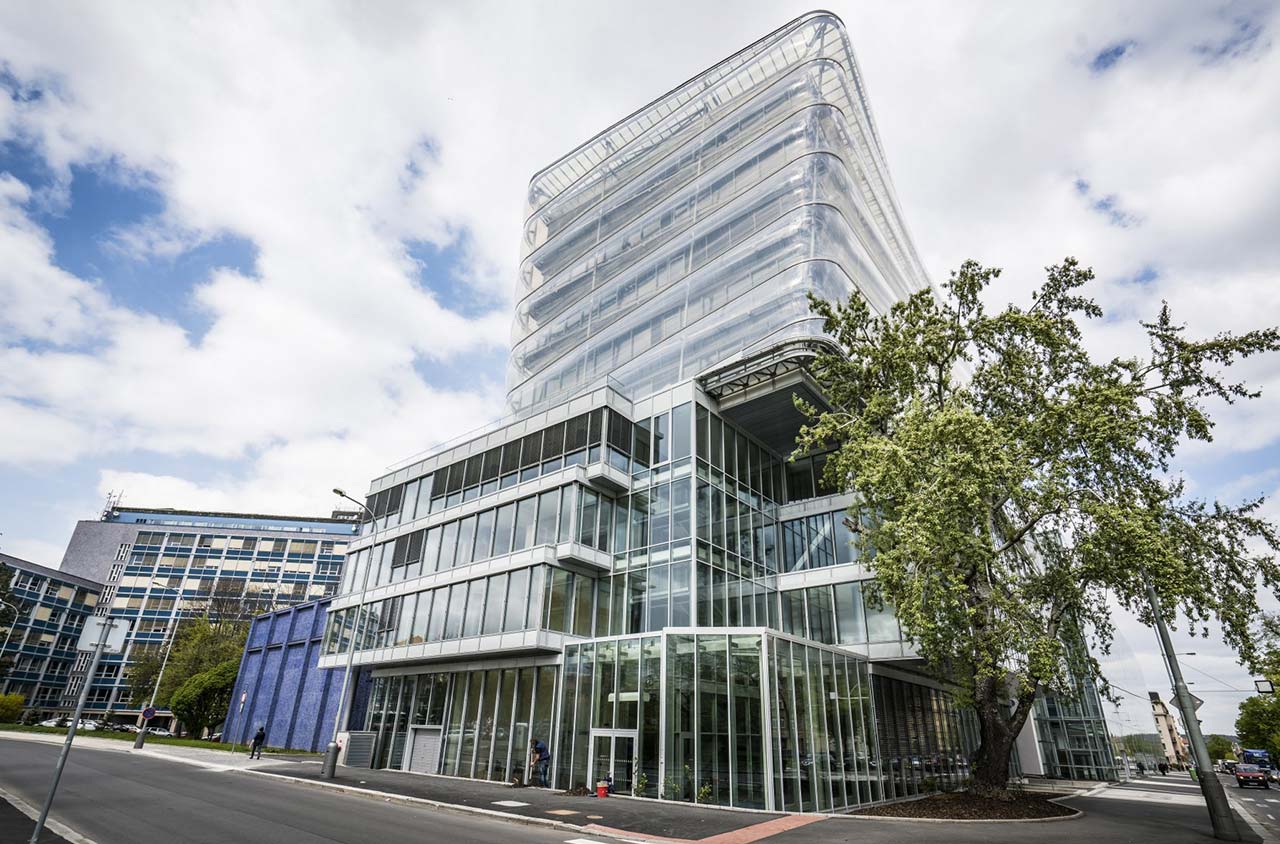
CIIRC CTU Building
The Institute is housed in a modern building completed in 2017, which is part of the extensive Dejvice campus. In addition to CTU, the campus is home to the University of Chemistry and Technology, Prague (UCT Prague), the Institute of Organic Chemistry and Biochemistry of the Czech Academy of Sciences (IOCB Prague), the National Library of Technology, and other institutions.
The CIIRC CTU building houses numerous research laboratories and the Industry 4.0 Testbed. It also offers ample space for public events, including conferences, training sessions, and open days. The glazed atrium is open to the public and is also used as a gallery. Connecting public and research spaces, as well as engaging the public in CIIRC’s activities, is an integral part of our mission.
More about the building and parking options
Projects
CIIRC CTU creates a unique ecosystem for academic–industry collaboration, drawing on diversified forms of project funding from national, European, and private sources.
Students
CIIRC CTU fosters collaboration across all CTU faculties and focuses on working with research teams and students from other universities and institutes of the Czech Academy of Sciences, bringing these teams into interdisciplinary collaboration.
Another objective is to help integrate research with the education of highly qualified doctoral students in informatics, robotics, and cybernetics at the national level. This involves taking existing cooperation between CTU, institutes of the Czech Academy of Sciences, and other technical universities to a higher level through connections with research infrastructures funded by the Structural Funds (CEITEC, NTIS, and IT4Innovations), drawing on experience gained through the Centre for Applied Cybernetics.
CIIRC researchers supervise more than 100 doctoral students at various faculties and universities in the Czech Republic and abroad. Since 2024, CIIRC has served as a doctoral training centre of the Faculty of Electrical Engineering (FEE CTU), providing high-quality PhD education in Informatics, Cybernetics and Robotics, and Bioengineering.
Students can also gain valuable professional experience while pursuing their bachelor’s or master’s degrees by participating in a wide range of projects, for example, in the Department of Industrial Informatics or the Industry 4.0 Testbed. Prestigious projects and the opportunity to work with state-of-the-art technologies of the future offer attractive opportunities for students to pursue their own thesis projects or engage in collaborative projects.